Repair or Replace Your Water Heater? Here Is How to Tell
Your water heater is acting up and you want the honest answer: repair it, or replace it? Here is the version most guides won't give you. The national rule of thumb says a tank lasts about 12 years, so anything younger is worth fixing. That math is wrong in Peoria. After years of pulling old tanks across the West Valley, we see units die at 7 or 8 years, not 12, because Arizona's hard water scales the tank from the inside long before the warranty says it should. So the repair-or-replace line sits earlier here than the internet thinks. Max Plumbing LLC is family-owned and licensed (AZ Contractor #345009, 5.0 stars from 181 reviews), and this post walks you through the six signs and the age math so you can make the call before you spend a dime. If the hot water is already gone, (480) 353-8080 reaches us any hour.
Should I repair or replace my water heater?
Repair it if the unit is under about 6 years old and the fault is a single isolated part: a thermocouple, a heating element, a pilot assembly, or a pressure relief valve. Replace it if the tank itself is the problem, which shows up as rust in the hot water, water pooling at the base, or a unit already 8-plus years old in this water. Those two rules cover most of what we see. The trap is the middle-aged tank that a repair keeps limping for a few more months before it fails outright.
The decision really comes down to what's failing. A part that bolts onto the outside of the tank is a repair all day long. The steel shell of the tank itself is not repairable once it corrodes through, and no amount of parts fixes it. That is the fork in the road, and the six signs below tell you which side you're on.
Signs you need a new water heater
These are the six tells we check in order when we walk up to a struggling unit. Any one of the bottom three usually means the tank is done. The top three can still be a repair, depending on the unit's age.
- Age of 8 to 12 years (or 7-plus here). Check the serial number sticker; the first four digits usually encode the month and year of manufacture. Past 8 years in West Valley water, you are on borrowed time even if it still runs.
- Rusty or brown hot water. If only the hot side runs rusty and the cold is clear, the corrosion is inside the tank, not your pipes. That is the tank telling you it is rotting from the inside.
- Rumbling or popping sounds. That is sediment. Hardened mineral scale on the tank floor traps a layer of water under it that boils and pops. It also insulates the burner from the water, so the tank works harder and fails faster.
- Water pooling at the base of the tank. A puddle under the tank is the most serious sign. It usually means the inner shell has finally corroded through, and that is not a repair. A leak at the base can also hide a bigger issue in the surrounding lines, so it is worth a look from our leak detection team before you assume it is only the tank.
- Rising energy bills with no change in use. A tank fighting through inches of sediment burns more gas or draws more power to hit the same temperature. A creeping bill with the same showers is the unit losing efficiency.
- Not enough hot water, or none at all. Running cold faster than it used to, or cold from the start, points to a failing element, a stuck thermostat, a pilot that won't hold, or a tank half-full of sediment.
If you have rusty hot water, popping, or a puddle at the base, stop weighing a repair. Those three are the tank itself, and the tank is the one part we can't fix.
How long does a water heater last in Arizona hard water?
Roughly 7 to 8 years for a standard tank in the West Valley, against the 10 to 12 years you'll read everywhere else. The reason is grains per gallon. Peoria, Glendale, and most of the West Valley run hard at about 12 to 18 grains per gallon, and that mineral load does two things to a tank. It builds a sediment bed on the floor that insulates the burner and cooks the steel, and it eats the anode rod, the sacrificial part that is supposed to corrode instead of your tank. Once the anode is spent, the tank is next.
You can stretch that lifespan. Flushing the tank yearly to clear the sediment and swapping the anode rod before it is fully eaten both help, and a whole-home water softener helps the most by taking the minerals out before they ever reach the tank. If your current unit is young and healthy, that maintenance is worth doing. If it is already past 8 years and showing signs, maintenance is throwing good money at a tank that is on its way out.
What replacement actually involves
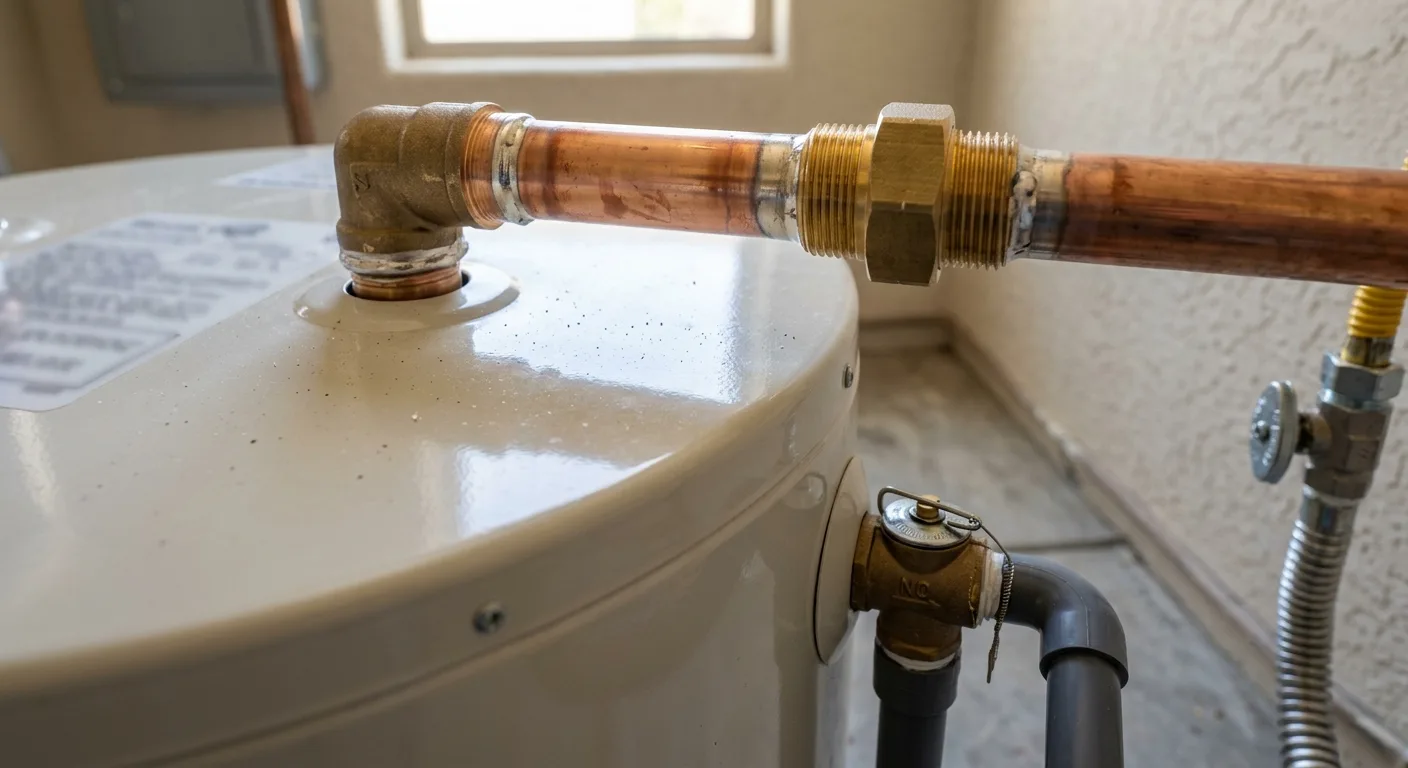
When the tank is the problem, replacement is the right call, and it is a same-day job for most homes. We size the new unit to your household so you are not paying to heat water you never use, connect the gas or electrical, and set the pressure relief valve, expansion tank, and venting to code before we leave.
Here is the honest part: we don't quote a water heater flat over the phone, because the number moves with the unit type, your existing gas or electrical setup, the venting, and whether we are swapping like-for-like or upgrading. Ask for an on-site estimate and you'll get a real figure after we see what's actually in your utility closet. When it is genuinely time, our water heater installation page covers tank and tankless, gas and electric, and you can request a free estimate in about 30 seconds.
When this is NOT your call to make today
Don't replace a water heater just because it's a few years old. If your tank is under 6 years, the hot water is clear, there's no puddle at the base, and the only symptom is a pilot that won't stay lit or a single cold shower, that is very likely a part, not the tank. Fix the part and keep the tank. We would rather talk you through a thermocouple than sell you a unit you don't need yet, and we'll tell you straight when a repair is the smarter money.
Repair or replace: frequently asked questions
The three questions we field most often on the phone when a homeowner is standing next to a struggling tank, deciding what to do.
Why is my water heater leaking from the bottom?
A puddle at the base of the tank usually means the inner steel shell has corroded through, and once that happens the tank cannot be repaired. It has to be replaced. Before you assume it's only the tank, though, rule out the simpler sources: a dripping pressure relief valve, a loose drain valve, or a fitting on the cold or hot line above the tank. Those are fixable. If the water is genuinely weeping from the body of the tank, it's done. Because a base leak can also mask a problem in the surrounding lines, it's worth having our leak detection team confirm where the water is really coming from before you commit either way.
Is it worth repairing a 10-year-old water heater?
In West Valley water, usually not. A 10-year-old tank here is well past the real 7-to-8-year service life we see locally, so a repair tends to buy months, not years, before the next failure. If the fix is a cheap external part and you're planning to move soon, a repair can be a reasonable bridge. But if you're staying and the tank is showing rust, sediment noise, or a base leak, the money is better spent on a replacement that resets the clock. We'll give you the straight math on-site so you're not guessing.
No hot water: what should I check first?
On a gas unit, look through the sight glass or access panel and check whether the pilot light is lit. If it's out and won't relight, or won't stay lit, the thermocouple is the usual suspect, which is a repair. On an electric unit, check your breaker panel, then the reset button on the upper thermostat behind the access panel. If the breaker is fine, the reset is set, and you still have no hot water, an element or thermostat has likely failed. If you're staring at a cold shower and can't wait for a diagnosis, our 24-hour plumber line is answered around the clock. Call (480) 353-8080 and we'll walk it with you.
Make the call with the real numbers
Repair the part, replace the tank. That is the whole decision in five words, and the six signs above tell you which one you're looking at. Just remember the local adjustment: a tank that a national guide calls middle-aged is often near the end here, because Peoria's hard water runs the clock faster. Max Plumbing LLC is family-owned, licensed under AZ Contractor #345009, and rated 5.0 stars across 181 reviews. Whether it's a same-day water heater installation or a middle-of-the-night no-hot-water emergency, we answer the phone 24/7. Call (480) 353-8080 and we'll tell you straight what your tank actually needs.