Low Water Pressure in Your House? Here Is Why, and How to Fix It
Low water pressure is one of the most common calls we get, and in the West Valley the cause is usually not what the generic guides tell you. Here is the honest version. Peoria, Glendale, and most of the surrounding West Valley run hard water at roughly 12 to 18 grains per gallon, and that mineral load quietly narrows old supply lines, packs aerators solid, and scales up pressure-reducing valves years faster than it would in a soft-water city. So the same "check your aerator" advice you read everywhere lands differently here. This post walks you through what is actually dropping your pressure, the two-minute test that tells you whether it is one fixture or the whole house, and exactly where the DIY stops and a call starts. Max Plumbing LLC is family-owned and licensed (AZ Contractor #345009, 5.0 stars from 181 reviews), and if the pressure is gone across your whole home, (480) 353-8080 reaches us any hour.
Why is my water pressure low all of a sudden?
A sudden drop across the whole house points to something upstream of your fixtures: a partially closed main shut-off valve, a failing pressure-reducing valve, a hidden leak bleeding off pressure, or the city or well supply itself. A sudden drop at one faucet is almost always a clogged aerator or a scaled cartridge. That split is the whole diagnosis, and it takes about two minutes to figure out which one you have.
Before you assume the worst, rule out the free stuff. Walk to your main shut-off, usually near the meter at the front of the house or where the line enters the garage, and confirm it is turned all the way open. A valve someone bumped half-closed after a repair is the single most overlooked cause of a house-wide pressure drop. If it is wide open and the pressure is still weak, keep reading.
Low water pressure in the whole house vs. one fixture
Run this test before you touch anything. Turn on the cold tap at your kitchen sink, then a bathroom sink, then a tub spout, one at a time, and notice where the weak flow shows up. If every fixture is weak, the problem is whole-house and lives at the main valve, the PRV, a hidden leak, or the supply. If only one or two fixtures are weak while the rest are fine, the problem is local to those fixtures, and that is good news because it is usually a homeowner fix.
- Whole house weak, hot and cold both. Look at the main shut-off, then the pressure-reducing valve, then suspect a hidden leak or a supply issue. This is the side that most often needs a plumber.
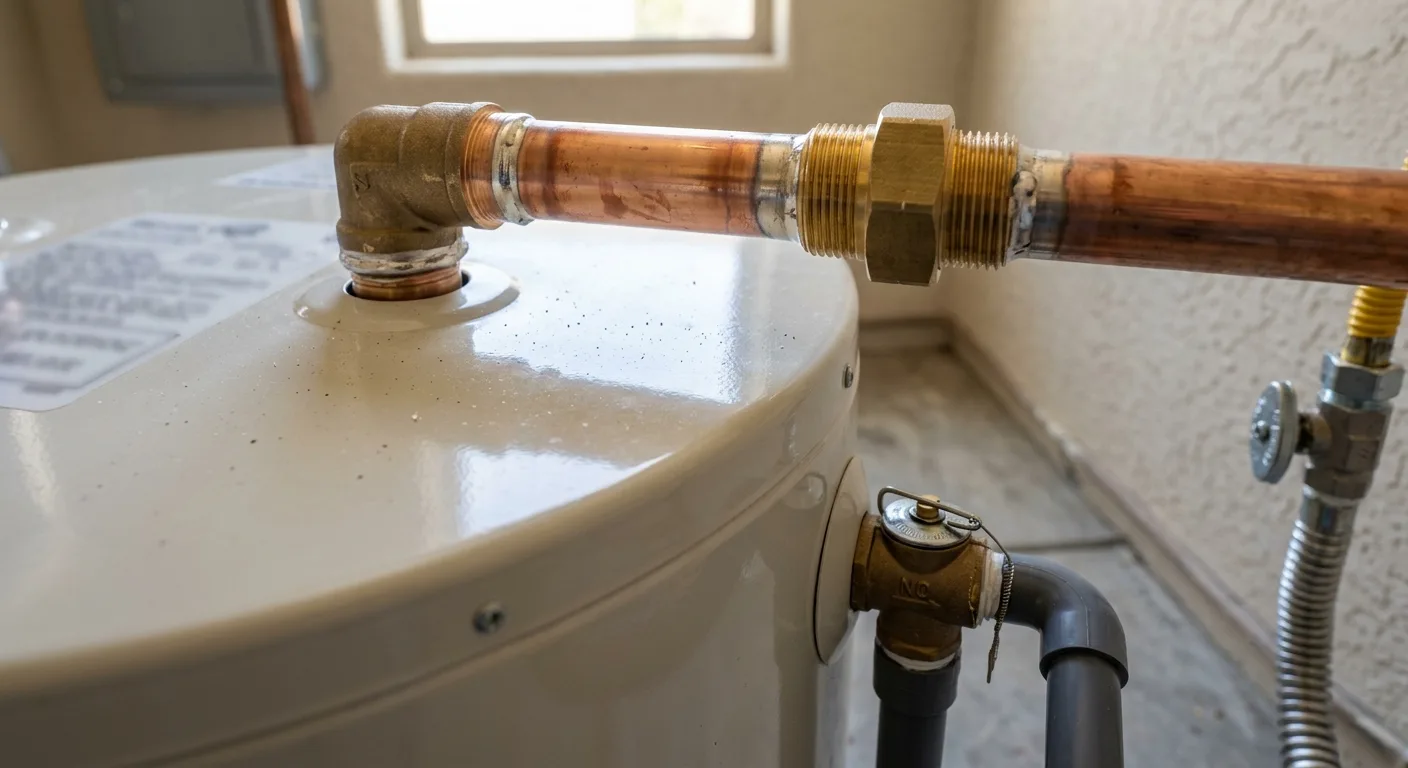
- Whole house weak, hot side only. A scaled-up water heater is restricting the hot line. In our water, sediment can choke the outlet nipple and the tank itself.
- One or two fixtures weak. Clogged aerator, scaled cartridge, or a half-closed angle stop under that sink. Start local before you blame the whole system.
How to fix low water pressure, step by step
Here is the sequence we run on the truck, trimmed to what a homeowner can safely do. Work it in order, top to bottom, because it moves from the cheapest, safest fixes to the point where you should stop and call.
- Confirm the main shut-off is fully open. Turn it counterclockwise until it stops. A gate valve someone left three-quarters closed will throttle the whole house.
- Clean the aerators. Unscrew the tip of each weak faucet by hand or with tape-wrapped pliers, rinse out the mineral grit, and soak the screen in white vinegar for an hour if it is crusted. In our water this alone fixes a huge share of single-fixture complaints.
- Check the angle stops under the sink. Make sure the small oval valves on the supply lines are open all the way. Scale can seize them partway.
- Flush the shower head. Same idea as the aerator. Pull it and soak it in vinegar to dissolve the calcium.
- Read your pressure. A $12 gauge that threads onto a hose bib tells you the truth. Healthy residential pressure sits around 45 to 70 psi. Below 40 across the whole house with the main wide open points at the PRV or a leak. Above 80 is its own problem and hard on your fixtures.
- Stop here if the whole house is still weak. Past this point you are into the pressure-reducing valve, the supply lines, or a hidden leak, and those are not homeowner jobs.
Ninety percent of the single-fixture calls we get would have been solved by cleaning one aerator. The whole-house calls almost never are, and that is the line where it pays to bring us in.
If you cleaned the aerators, confirmed the main is open, and the pressure is still weak everywhere, the next suspects cost more to reach. Corroded or leaking supply lines are a real culprit in older homes here, and our corroded or leaking supply lines repair covers exactly that. Ready to skip the guesswork? Request a free estimate and tell us what you are seeing.
Clogged aerator: the fix nobody checks first
The aerator is the little mesh screen at the tip of your faucet, and in 12-to-18-grain water it packs with white calcium grit faster than anywhere else in the country. When one faucet runs weak while the rest of the house is strong, the aerator is the first and cheapest thing to check. Unscrew it, tap the debris out, soak it in white vinegar, and rinse. If the flow jumps back to normal, you just saved yourself a service call. If it is still weak with the aerator removed entirely, the restriction is deeper in that fixture's line or valve.
Pressure-reducing valve failure symptoms
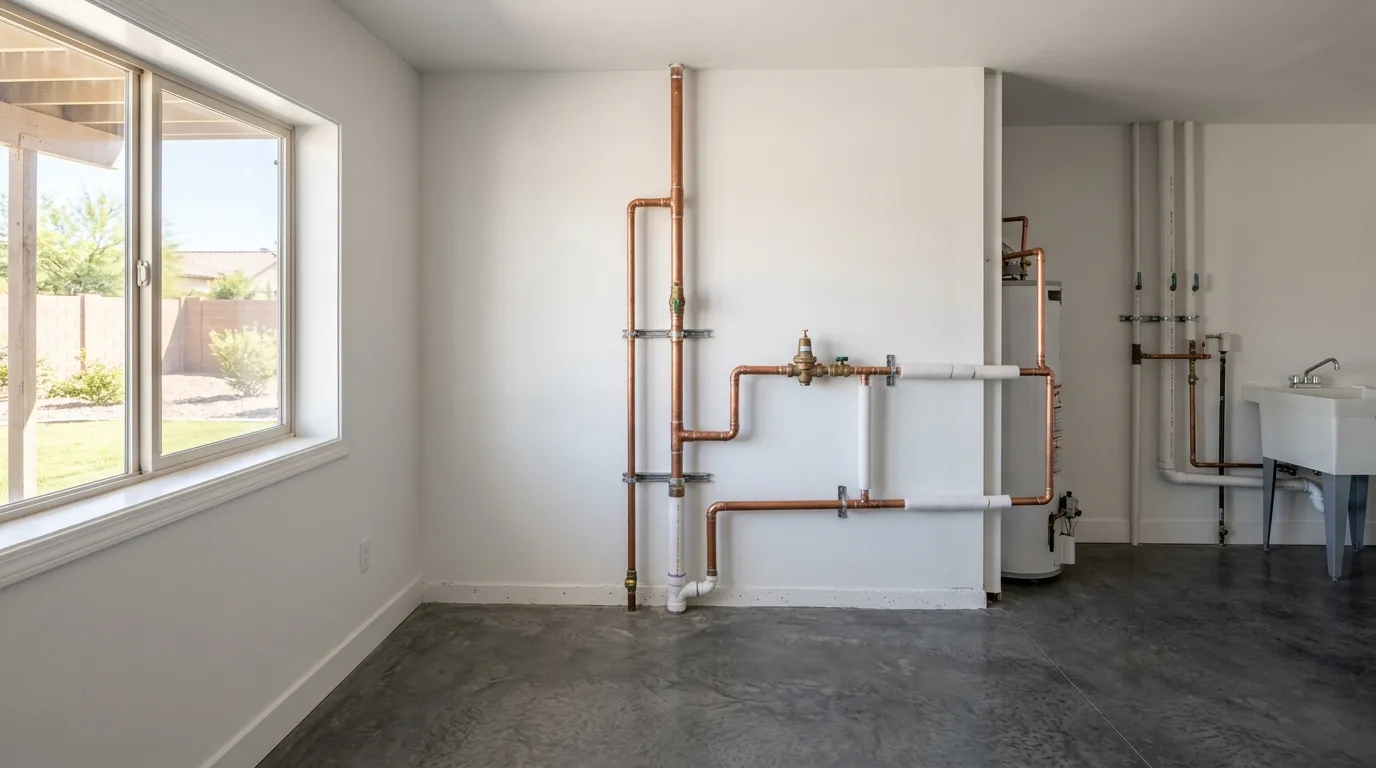
The pressure-reducing valve, or PRV, sits where the city line enters the house, usually near the main shut-off, and it steps the street pressure down to a safe household level. When it fails, you get one of two symptoms: pressure that has slowly dropped house-wide over weeks and months, or pressure that swings, strong in the morning and weak by evening. In our hard water the internal seat and spring scale up and lose their calibration, which is why West Valley PRVs tend to fail sooner than the 10-to-15-year rule of thumb suggests. A PRV is not a DIY swap, since it sits on the pressurized main and has to be set with a gauge. That is a call.
When low pressure is NOT a DIY job
Here is the gate, stated plainly, because getting it wrong wastes your afternoon and sometimes floods a wall. Stop the DIY and call a licensed plumber when any of these is true. The whole house is weak with the main confirmed fully open. Your pressure gauge reads under 40 psi house-wide. You suspect the PRV, since it lives on the pressurized main and has to be reset with a gauge. Or you see a wet spot, hear running water with everything off, or your water bill jumped, because a hidden leak can drop whole-house pressure and needs our leak detection team before it undermines a slab. If none of those apply and only one fixture is weak, keep going on your own. You have got this.
Low water pressure FAQs
The questions we field most on the phone when a homeowner is standing at a weak faucet trying to decide whether to grab a wrench or grab the phone.
Can a hidden leak cause low water pressure in the whole house?
Yes. Water escaping from a cracked or corroded line, whether under the slab, in a wall, or out at the yard service line, bleeds off pressure before it ever reaches your fixtures, so the whole house runs weak. The tells are a spike in the water bill with no change in use, the sound of running water when everything is off, a warm spot on a slab floor from a hot-line leak, or damp ground along the service line. Because these leaks hide, the smart move is to have our leak detection team pinpoint the source before you start opening walls or floors. Chase and the crew locate it first, then fix only what actually failed.
What is normal home water pressure in the Phoenix Valley?
For a healthy home, 45 to 70 psi is the range you want, measured with a cheap gauge threaded onto an outdoor hose bib. Under 40 psi house-wide, with your main valve confirmed fully open, points at a failing PRV, a hidden leak, or scaled-up supply lines. Over 80 psi is the opposite problem and it is worth fixing too, because high pressure hammers your fixtures, joints, and water heater and shortens their life. If your reading is off in either direction, we can set a PRV or track down the restriction on-site.
Why does my water pressure get worse over the years?
In the West Valley, hard water is almost always the answer. At 12 to 18 grains per gallon, calcium and magnesium plate the inside of your supply lines, valves, and fixtures a little more every month. In homes built before 1990 with galvanized steel pipe, that buildup slowly closes off the interior of the pipe until strong pressure becomes a memory. Aerators and cartridges scale the same way. Annual water heater flushing, cleaning aerators, and, best of all, a whole-home water softener all slow the process. When the pipe itself has narrowed past saving, though, the fix is re-piping the affected runs, and we will tell you straight when that is the case rather than sell you a valve that will not help.
Get your pressure back
Low water pressure comes down to a simple split: one weak fixture is almost always a clogged aerator you can clear yourself in ten minutes, while a weak whole house points at the main valve, a scaling PRV, tired galvanized pipe, or a hidden leak. Just remember the local adjustment. Peoria's 12-to-18-grain water runs that clock faster than any national guide accounts for, so parts that a soft-water city would call middle-aged are often near the end here. Max Plumbing LLC is family-owned, licensed under AZ Contractor #345009, and rated 5.0 stars across 181 reviews. When the DIY runs out and you need the real fix, we answer the phone 24/7. Call (480) 353-8080 or request a free estimate and we will tell you straight what is actually choking your pressure.